
Matcha: smart caffeine, real benefits, and the rules that actually matter
So matcha is trending at the moment, but do we actually know the little details that matter? They usually get lost under all the pretty foam and viral videos.
This post keeps the ritual and bins the fluff. What it does. When to drink it. What to buy. Why your hair might have started shedding. Plus recipes that earn their keep.
What matcha is, chemically speaking
Matcha is stone-ground, shade-grown green tea. You drink the leaf itself, not an infusion. That means a concentrated mix of catechins like EGCG, plus caffeine and L-theanine. The trio matters. Catechins = antioxidant activity. Caffeine = alertness. Theanine = smoother, calm focus.
When to drink it for best effect
If you want the antioxidant benefit, timing is everything. Human trials show food can blunt EGCG absorption. Have matcha away from meals. Think mid-morning or mid-afternoon, not with breakfast.

The iron issue, especially for women
Tea polyphenols inhibit non-haem iron absorption. Vitamin C enhances non-haem iron. For supplements, alternate-day dosing improves fractional absorption by lowering hepcidin. In practice. Keep matcha and iron far apart. Take iron with vitamin C on alternate days unless your clinician says otherwise.
Protocol if you take iron
-
Take iron on an empty stomach with vitamin C.
-
Do it every other day rather than daily, unless your clinician told you otherwise.
-
Leave several hours between iron and matcha.
“My hair started falling out when I switched to matcha” - Two checks:
- Ferritin. Low ferritin is linked with telogen effluvium and female hair loss patterns. If you upped tea and trimmed iron intake, you might have tipped a borderline ferritin into the shedding zone. Ask for a ferritin test. Fix timing and intake.
2. Green tea and hair, mechanistically. Preclinical work suggests EGCG may inhibit 5-alpha-reductase and modulate follicle signalling. Interesting, but not a miracle. Do not rely on matcha alone for regrowth.
Cognitive performance and “calm focus”
Randomised trials show caffeine plus L-theanine can improve sustained attention versus placebo or either alone. That is why matcha often feels steadier than coffee.
Skin benefits, honestly
There is human data for green-tea polyphenols and photoprotection, though results vary by dose and method. Small clinical studies also suggest topical EGCG can help mild to moderate acne. Nice support act. Still wear sunscreen.
How to buy good matcha
Not all “matcha” is matcha. Here is what actually signals quality.
1) Japanese origin, shade-grown, early-season leaves. Shade raises theanine and sweet-umami amino acids. First-flush tencha tastes smoother and often tests higher in theanine.
2) Tencha milled to matcha. Proper matcha is ground tencha, with stems and veins removed before milling. That process underpins the flavour and composition you pay for.
3) Colour and aroma. Bright, deep green with sweet-grassy, seaweed-umami notes beats dull yellow-green every time.
4) Third-party lab testing. Tea plants can accumulate metals and may carry residues if farms are not well managed. Reputable sellers share recent heavy-metal and multi-residue pesticide screens.
5) Region helps, but is not the whole story. Uji, Nishio, Yame, Shizuoka and Kagoshima are respected areas. Treat region as a signal, not a guarantee. Prioritise shading, first-flush harvest, proper tencha processing, ultrafine milling, vivid colour and clean lab reports.
Recipes, timing tips and why they work
Timing rule for all recipes below. If you want maximum catechin uptake, enjoy them away from meals. If you supplement iron, keep matcha several hours from your dose and take iron with vitamin C on alternate days.
1) Hot matcha latte with adaptogens and spices
Why these add-ins:
Ashwagandha has randomised controlled evidence for reducing perceived stress and morning cortisol in stressed adults.
Lion’s mane has small double-blind trials suggesting cognitive support in older adults with mild impairment. Early, but promising.
Cinnamon and clove add polyphenols with antioxidant and anti-inflammatory signals in human studies and mechanistic work.
Ingredients200 ml milk of choice
1 tsp ceremonial matcha
100 ml hot water, about 80 to 85°C
¼ to ½ tsp ashwagandha powder
¼ to ½ tsp lion’s mane powder
Pinch cinnamon
Tiny pinch ground cloves
1 tsp bee honey
Method
Warm milk with ashwagandha, lion’s mane, cinnamon and cloves. Whisk matcha with hot water until frothy. Pour spiced milk into a cup, then the matcha. Stir in bee honey.
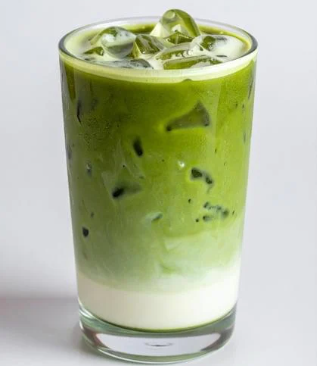
2) Iced matcha latte
Ingredients
Ice
200 ml milk of choice
1 tsp matcha
1 to 2 tsp honey
50 to 80 ml warm water
Method
Whisk matcha and honey with the water until smooth. Add ice and milk to a glass. Pour in the matcha mix and stir.
Milk options
Dairy gives a protein boost and a classic creamy profile. Many boxed plant milks use gums or seed oils, so homemade can be cleaner.
My Delicious & Easy Homemade cashew milk
1 cup cashews, 4 cups water, pinch sea salt, pinch cinnamon
Blend 60 seconds. Strain through a fine sieve into a bottle. Keep chilled for 3 to 5 days
3) Strawberry compote matcha latte
Why: A tart-sweet lift without syrups. Strawberries bring natural vitamin C and colour. Keep it away from meals if you want the catechin benefit.
Strawberry compote
200 g strawberries, hulled and chopped
1–2 tsp bee honey
1 tsp lemon juice
Simmer everything on low for 6–8 minutes until jammy. Cool- Add compote as desired to iced matcha latte
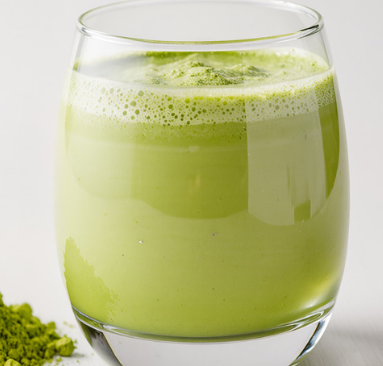
4) My matcha protein shake
Why: Away from meals helps catechin uptake. Protein and fats temper any jitters while the caffeine plus theanine supports focus & chia seeds add a fibre boost.
Ingredients
- 1 banana
- 1 tsp Japanese matcha powder
- 1 scoop vanilla vegan protein (I use Protein Works)
- ½ tsp Ceylon cinnamon
- Pinch sea salt
- 1 tsp ashwagandha powder
- Handful ice + water or plant milk
Method
Blend 30 seconds until silky. Sip slowly.
5) Matcha “butter” dates
Why: A smarter sweet. Dates give quick energy before training. Fat slows the rise in glucose. Have them away from meals if you want the catechin hit.
Ingredients
6 medjool dates, pitted
2 tbsp softened salted butter or tahini for a plant-based option
1 tsp matcha
Method
Stir matcha into butter or tahini. Fill dates. Chill 10 minutes
6) Matcha white chocolate truffles
Why: A joyful afternoon pick-me-up. Keep them away from meals for catechin uptake.
Ingredients
- 1 cup unsweetened shredded coconut
- 1/2 cup coconut cream or full-fat coconut milk
- 2 tablespoons maple syrup or honey (adjust to sweetness)
- 1 tablespoons matcha powder
- 1/2 teaspoon vanilla extract
- 250g white chocolate to coat
- A pinch of salt
- handful crushed pistachios
-
-
Method
Mix all the ingredients bar white chocolate, mixture should be sticky but easy to roll into small balls, if its too dry add some more cream. Chill to scoopable. Roll into balls, chop white chocolate finely and add 1 tsp matcha combine until smooth, then coat the truffles. Optional to top with crushed pistachios before cooling and then cool in the fridge.
-
Matcha: Natural skincare you can eat!
1) Matcha, EVOO and bee-honey face mask
Why: Green-tea polyphenols show anti-inflammatory and photoprotective effects in human and mechanistic research. Honey has antimicrobial and wound-healing activity across clinical literature. Extra-virgin olive oil brings squalene and phenolic antioxidants that can support barrier lipids and calm inflammation, leaving a soft, dewy finish. If your skin is sensitive or eczema-prone, use jojoba oil instead of EVOO, or patch test first, as high-oleic oils like olive can loosen the skin barrier in some people.
How:
1 tsp matcha
1 tsp raw honey
½ tsp extra-virgin olive oil or Jojoba
Mix to a paste. Apply thinly for 10 minutes. Rinse. Once weekly.
2) Matcha ice cubes for morning face icing
Why: Cooling de-puffs. Topical catechins add a light anti-inflammatory nudge. This is a cosmetic ritual, not a medical treatment.
How:
Whisk ½ tsp matcha into 250 ml cooled boiled water. Freeze. Wrap a cube in clean muslin and glide over skin 30 to 60 seconds. Pat dry and moisturise.
How I Can Support You
My Story
As someone who struggled with hormonal imbalance and a disordered relationship with food, studying nutrition helped me reframe nourishment. I now eat with variety, balance, and curiosity – not rules. And I help others do the same.

You’re not alone and you don’t have to guess
If you want help making this practical, I work with clients online through 1:1 mentorships and nutrition packages. We build simple, evidence-based routines that fit your life. Think meal planning without the faff, supplement timing that actually absorbs, and coaching that keeps you consistent.
What I offer
1:1 nutrition consultations and tailored plans
Ongoing mentorship with check-ins and adjustments
Yoga and breathwork add-ons for stress and sleep
Supplement support and protocols that suit your goals
Support for hormonal imbalances across the cycle
Support for disordered eating patterns or feeling disconnected from food and body
I gift a free 20 minute intro call so we can see if it is a fit. Book yours below.
References
Naumovski N, Blades BL, Roach PD. Food Inhibits the Oral Bioavailability of the Major Green Tea Antioxidant Epigallocatechin Gallate in Humans. Antioxidants (Basel). 2015;4(2):373-393. doi:10.3390/antiox4020373. PMID:26783711; PMCID:PMC4665468.
Yang T, Xie Y, Lu X, Yan X, Wang Y, Ma J, Cheng X, Lin S, Bao S, Wan X, Lucas WJ, Zhang Z. Shading Promoted Theanine Biosynthesis in the Roots and Allocation in the Shoots of the Tea Plant (Camellia sinensis L.) Cultivar Shuchazao. J Agric Food Chem. 2021;69(16):4795-4803. doi:10.1021/acs.jafc.1c00641.
Tashkandi H. Honey in wound healing: An updated review. Open Life Sci. 2021;16(1):1091-1100. doi:10.1515/biol-2021-0084. PMID:34708153; PMCID:PMC8496555.
Di Pede G, Mena P, Bresciani L, Achour M, Lamuela-Raventós RM, Estruch R, Landberg R, Kulling SE, Wishart D, Rodriguez-Mateos A, Crozier A, Manach C, Del Rio D. Revisiting the bioavailability of flavan-3-ols in humans: A systematic review and comprehensive data analysis. Mol Aspects Med. 2023;89:101146. doi:10.1016/j.mam.2022.101146.
Chen X, Ye K, Xu Y, Zhao Y, Zhao D. Effect of Shading on the Morphological, Physiological, and Biochemical Characteristics as Well as the Transcriptome of Matcha Green Tea. Int J Mol Sci. 2022;23(22):14169. doi:10.3390/ijms232214169. PMID:36430647; PMCID:PMC9696345.
Ge S, Wang Y, Shen K, Wang Q, Ahammed GJ, Han W, Jin Z, Li X, Shi Y. Effects of Differential Shading on Summer Tea Quality and Tea Garden Microenvironment. Plants (Basel). 2024;13(2):202. doi:10.3390/plants13020202. PMID:38256755; PMCID:PMC10821519.
Cui J, Wu B, Zhou J. Changes in amino acids, catechins and alkaloids during the storage of oolong tea and their relationship with antibacterial effect. Sci Rep. 2024;14(1):10424. doi:10.1038/s41598-024-60951-5. PMID:38710752; PMCID:PMC11074310